
Reward Heads
Using our heads to solve your Reward challenges.
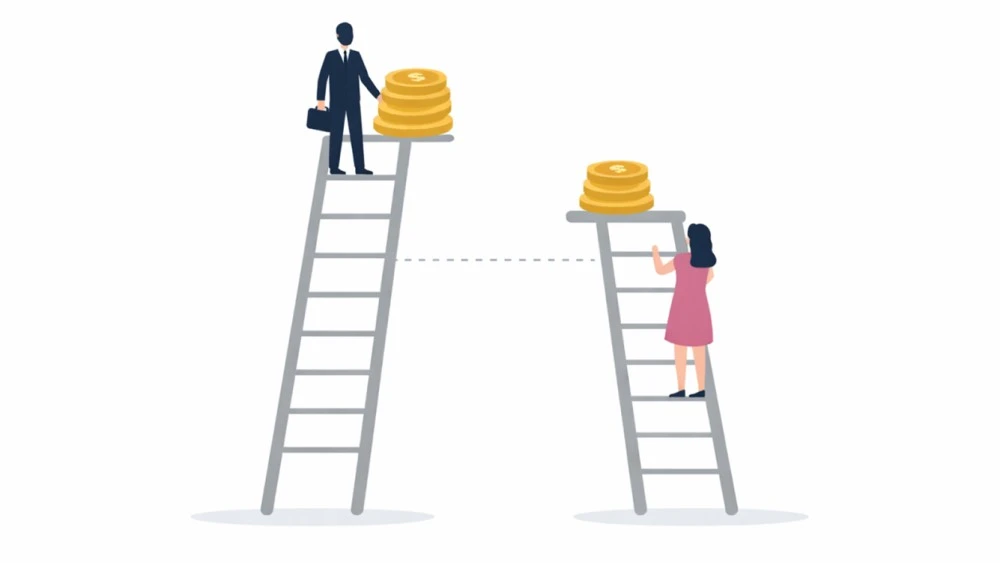
Every year organisations publish their gender pay gap figures. The reports are released. The commentary is written. A few headlines appear. And then, in many organisations, something quietly happens. Nothing… or at best, very little.
That's not because organisations don't care. In many cases they absolutely do. But gender pay gap analysis can sometimes feel like a compliance exercise rather than a strategic conversation and that's where the real challenge lies.
There is an uncomfortable truth about the numbers. Recent projections suggest that if progress continues at the current pace, the gender pay gap may not close for several decades.
That shouldn't surprise many people working in Reward, because when you dig into the data, the patterns are remarkably consistent. Many organisations say, quite correctly, that men and women are paid equally for the same role. And often they are.
But that isn't what the gender pay gap measures. The gap is driven by distribution across the organisation. Who occupies senior roles. Who is in higher-paying job families. Who receives larger bonuses. Whose pay has compounded over time.
You can have completely compliant equal pay practices and still publish a sizeable gender pay gap, and that's where the complexity starts and why organisations sometimes stall.
When leaders first see their gender pay gap analysis broken down properly, the reaction can be a mixture of concern and uncertainty because the drivers are rarely simple. They may involve:
None of these issues can be fixed overnight and when the causes feel structural and long-term, the temptation is to monitor the numbers rather than intervene and say:
But simply being typical of your sector doesn't necessarily mean the situation is acceptable. So, what are the real risks of doing very little? The risks of inactivity are often underestimated.
First, there's credibility. Many companies talk passionately about inclusion, fairness and opportunity. But employees increasingly compare those messages with the published gender pay gap figures. If the narrative and the numbers feel misaligned, trust can quietly erode. And that means that employers become less attractive especially to new hires.
Second, there's engagement. When commentary around the gender pay gap lands in the media, particularly phrases suggesting women effectively work weeks of the year "unpaid" compared with men, it resonates emotionally. Even if the gap is driven by structural factors, perception matters. Employees rarely analyse the statistical mechanics behind the figures. They respond to what the numbers appear to say. And that means that your current employees could be less engaged with all that means for discretionary effort
Third, there's retention risk. In many organisations the most pronounced gaps appear in mid- to late-career populations. That's often where senior expertise sits. If experienced women begin to feel progression has stalled or the playing field isn't level, organisations can lose valuable talent at precisely the point when it matters most, and replacing experienced talent is rarely cheap.
Another reason organisations can't afford to treat gender pay gap reporting as a passive exercise is that the regulatory environment is shifting and expectations are evolving. Increasingly, organisations are being encouraged, and in some cases required, to go beyond publishing the numbers. The new Employment Rights Bill in the UK means employers with 250 or more employees (so those who already have to publish their gender pay gaps) will be required to detail the evidence-based actions they are taking to improve gender equality amongst their employees, including addressing the gender pay gap and supporting women during the menopause. The Act introduces a new power to make regulations to require employers to publish Equality Action Plans. This is voluntary from now - the April 2026 reporting deadline - and mandatory in Spring 2027.
Wider stakeholders want to see action plans. That means being transparent about:
This moves the conversation away from disclosure and towards implementation.
There is also increasing attention on menopause as a workplace issue. The government have just launched landmark gender pay gap and menopause action plans to help women thrive at work ahead of International Women's Day. For 2026, organisations are being encouraged to have specific menopause action plans and publish what steps they are taking to support employees through menopause. And then from spring 2027 that will become mandatory.
While this is often framed as a wellbeing topic, it has direct implications for the gender pay gap. Menopause typically affects women in their late 40s and 50s, precisely the stage when many are moving into or operating within senior roles. If women reduce hours, step back from progression opportunities, or leave the workforce altogether because workplaces are not supportive, this can widen the gender pay gap further by reducing female representation at higher pay levels. As a result, menopause action plans and reporting are increasingly being viewed as part of the broader conversation around gender equity, workforce sustainability and leadership diversity.
At the same time, broader developments around pay transparency internationally, including Europe, are raising expectations around fairness and explainability. Even where regulations differ between countries, the direction of travel is clear - more transparency, more scrutiny, more accountability.
Many leaders across organisations raise cost concern arguments. Interventions designed to address structural pay gaps can feel financially daunting, but the reality is that inaction also carries a cost:
The difference is that those costs show up in different places, recruitment budgets, engagement scores, employer brand perception. So, they're often just less visible, but they are still real.
The gender pay gap can feel overwhelming when treated as a single headline number, so how do we turn a daunting problem into a practical strategy? It becomes far more manageable when organisations analyse the underlying drivers properly. For example:
Once those questions are answered, organisations can begin building a structured action plan. Not one-off pay adjustments, not a communications exercise, but a deliberate, multi-year strategy designed to shift the trajectory. Because waiting won't fix it.
One of the quiet risks in gender pay gap conversations is the belief that the problem will gradually resolve itself as the workforce evolves but history suggests progress can be glacier slow without deliberate action.
The question for organisations isn't simply whether a gap exists, most organisations have one. The more important question is whether the organisation has a clear plan to reduce it over time. Because the difference between passive monitoring and active intervention can determine whether meaningful change happens in years… or decades.
At Reward Heads we work with organisations to turn gender pay gap reporting into practical, commercially grounded action, from diagnostics and action planning through to leadership conversations and communication.
If you would like to explore how we can help with your gender pay gap strategy then please reach out to rewardsolutions@rewardheads.co.ukto arrange a chat
We also have e-learning modules on both Gender Pay and Ethnicity Pay which guide you not only through how to calculate but, more importantly, how to understand what is going on to cause the gaps in the first place. You can purchase these here: Coaching
Claire Williams - Consulting Director